You’ve been cooking seriously for a while now. You know the difference between a bad knife and a decent one, and you’ve decided to finally spend real money on a chef’s knife — the single tool that touches almost every meal you make. The problem is, once you start researching at this price tier, you land in a genuinely hard decision: German versus Japanese, thick-spine versus thin, rock-chopping versus push-cutting. The Wüsthof Classic 8-inch (street price around $160–$180) and the Shun Premier 8-inch (around $175–$200) sit close enough in price that the choice isn’t about budget — it’s about fit. This guide lays out the actual differences between the two, names who each knife is built for, and gives you a clear decision rule so you can stop reading forums and start cooking.
| EDITOR'S PICKShun Premier 8" Chef's Knife | Mid-tierWÜSTHOF Classic 8" Chef's Knife | Budget pickShun Sora 8" Chef's Knife | |
|---|---|---|---|
| Blade Steel | VG-MAX | — | VG10 Steel Edge / 420J Stainless |
| Construction | Damascus Clad | — | — |
| Handle Material | Pakkawood | — | — |
| Blade Length | 8" | 8" (7.9") | 8" |
| Style | — | — | Gyuto-Style |
| Price | $219.95 | $128.99 | $109.95 |
| See on Amazon → | See on Amazon → | See on Amazon → |
The Core Engineering Difference (and Why It Actually Matters)
The Wüsthof Classic is a German-style chef’s knife. The Shun Premier is a Japanese-style gyuto. Those aren’t just cultural labels — they describe two distinct engineering philosophies that affect how the knife feels in your hand every single day.
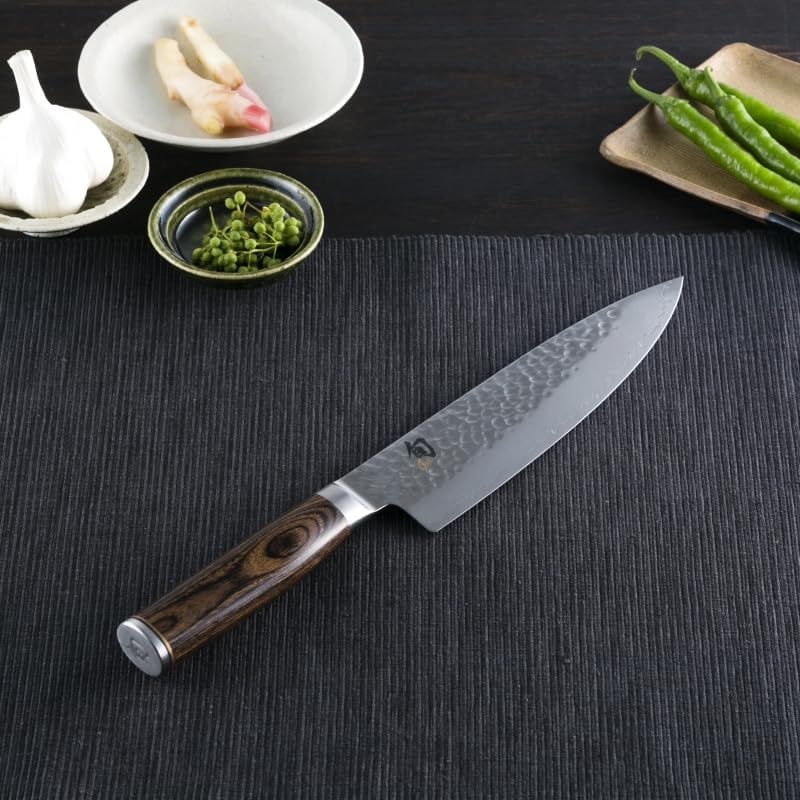
Steel hardness: Wüsthof uses their proprietary X50CrMoV15 stainless steel, heat-treated to approximately 58 HRC (Rockwell Hardness, the standard scale for measuring how hard a blade is). Shun’s Premier uses VG-MAX steel — a high-carbon stainless — clad in 68 layers of Damascus-pattern steel, with a core hardness around 60–61 HRC. Harder steel holds a sharper edge longer, but it’s more brittle; softer steel dulls faster but is more forgiving if you accidentally hit a bone or drop it.
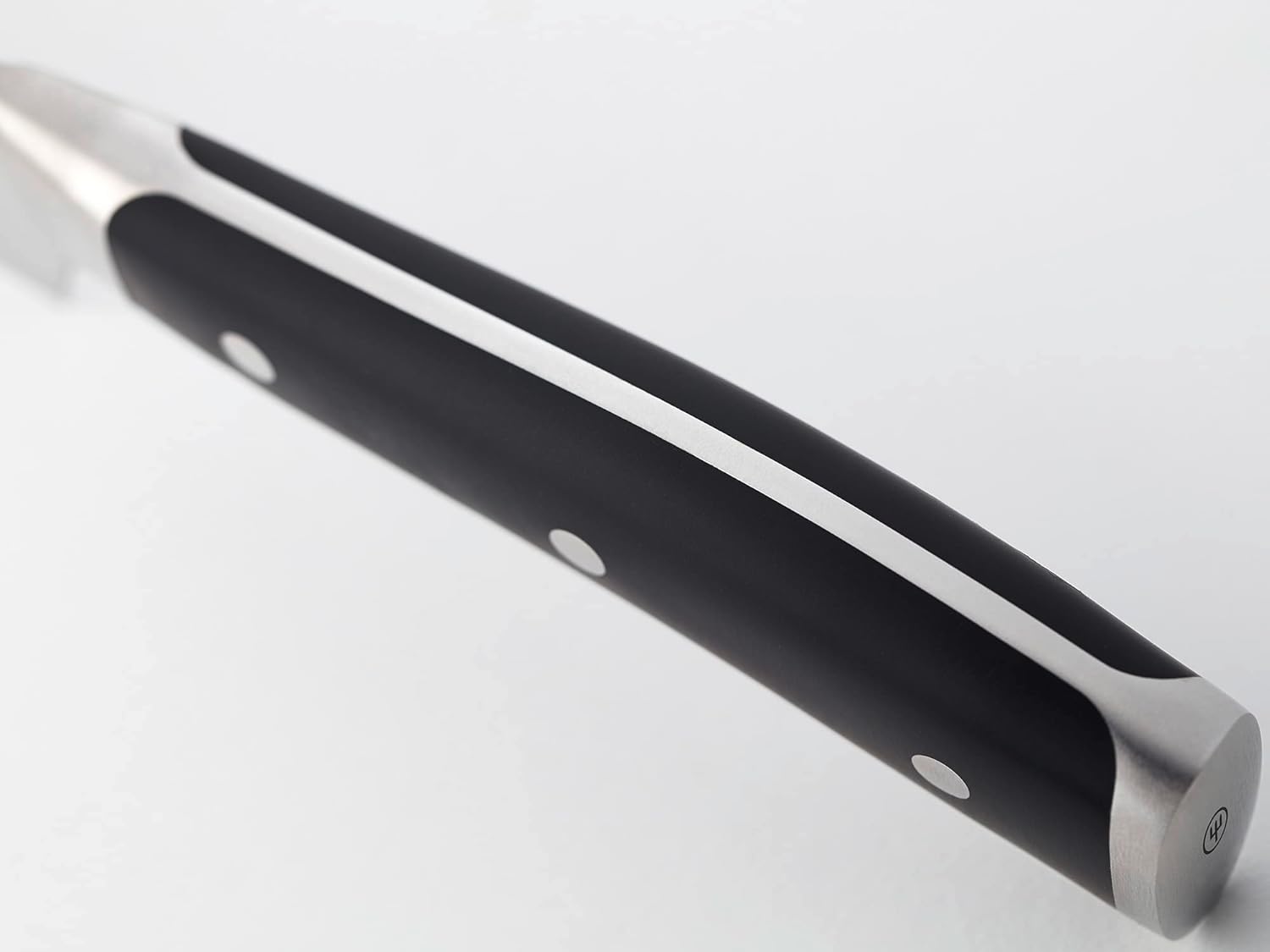
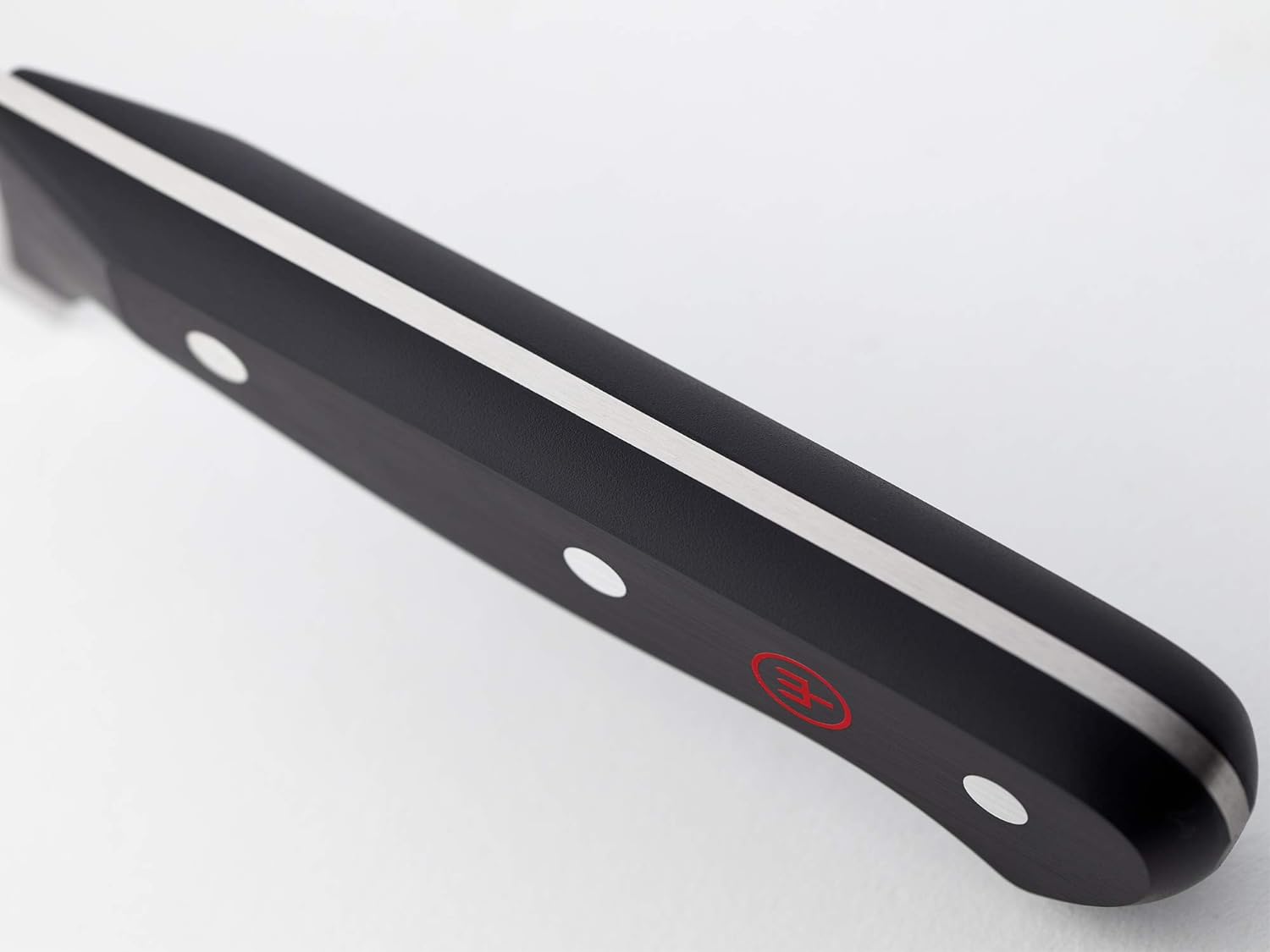
Blade geometry: The Wüsthof Classic carries a blade angle of 14 degrees per side (28 degrees inclusive), a bolster (the thick steel collar between blade and handle), and a full tang (the steel runs all the way through the handle). It has a pronounced curve from heel to tip that rewards a rocking motion. The Shun Premier is ground to 16 degrees per side, with a thinner, flatter profile toward the tip that rewards a push-cutting or slicing stroke. It’s also noticeably lighter — most owners report the 8-inch Premier feels almost alive in the hand by comparison.
Steel and Geometry at a Glance
| Feature | Wüsthof Classic 8” | Shun Premier 8” |
|---|---|---|
| Steel hardness | ~58 HRC | ~60–61 HRC |
| Edge angle (per side) | 14° | 16° |
| Blade weight (approx.) | ~8.5 oz | ~6.5 oz |
| Street price (May 2026) | $160–$180 | $175–$200 |
| Country of origin | Solingen, Germany | Seki, Japan |
WÜSTHOF
$128.99
In stock on Amazon
Check price on AmazonSerious Eats, in their “Best Chef’s Knives, Tested and Reviewed” guide, consistently notes that the German-versus-Japanese distinction maps directly onto cutting style preference and that neither approach is objectively superior — but your dominant cutting motion matters enormously for day-to-day satisfaction. That framing is worth keeping in mind as you read through the rest of this comparison.
Edge Retention, Sharpening, and Long-Term Maintenance
This is where the tradeoff gets concrete, and it’s worth being honest about what each knife costs you over five years — not just at purchase.
The Wüsthof Classic: Forgiving and Field-Serviceable
The softer steel means you’ll reach for a honing rod (a steel or ceramic rod that realigns the edge without removing metal) more often — some owners report weekly honing if they’re cooking daily. When it does need sharpening on a whetstone or with a pull-through sharpener, it’s forgiving. The geometry is simple enough that most home cooks can sharpen it themselves after a few practice sessions. Wirecutter, in their “Best Chef’s Knife” guide, notes the Classic’s durability and ease of maintenance as consistent strengths across long-term owner reports, and it has appeared on their recommended list across multiple years of testing updates.
WÜSTHOF
$128.99
In stock on Amazon
Check price on AmazonThe Shun Premier: Sharp Longer, More Demanding at the Stone
The harder steel holds an acute, scary-sharp edge for longer between sharpening sessions — but when it finally needs sharpening, you’re in more delicate territory. The thinner blade and harder steel are more susceptible to chipping if you sharpen at the wrong angle, hit a frozen ingredient, or use it to crack a lobster shell (please don’t). Most owners either invest in Japanese water stones and learn the technique properly, or pay for professional sharpening. Cook’s Illustrated, in their chef’s knife testing and ratings coverage, notes that Japanese-style knives in this hardness range reward cooks who are methodical about sharpening and storage.
Shun
$219.95
In stock on Amazon
Check price on AmazonThe Honest Five-Year Math
If you’re comfortable on a whetstone and treat your knife with care, the Shun Premier’s edge retention likely means fewer total sharpening sessions over a five-year period. If you’re a once-a-year-sharpening, haphazard-storage type, the Wüsthof will serve you better and survive the abuse.
Storage note for apartment cooks: Both knives reward magnetic wall strips over knife blocks (better airflow, no dulling friction from block slots) and are damaged by dishwashers. The Shun Premier’s Damascus cladding will spot and streak if you don’t dry it immediately after washing. Neither point is debatable.
WÜSTHOF
$128.99
In stock on Amazon
Check price on AmazonFeel, Balance, and Cutting Style — The Deciding Variable
Specs explain the “what”; this section explains the “why it matters in practice.”
The Wüsthof Classic: Stable, Weighty, Built for the Rock Chop
The Classic has a bolster — that thick metal collar between blade and handle — which moves the balance point toward the handle. Owners who grip the handle traditionally find this reassuring and stable for long prep sessions. The weight encourages the blade to do the work on heavy ingredients. Food & Wine, in their “Best Chef’s Knives” roundup, highlights that the Classic’s balance and durability make it a go-to recommendation for cooks who want a workhorse with no personality quirks. It earns that reputation: for heavy vegetable prep (squash, root vegetables), breaking down whole chickens, and rocking herb cuts, the Classic’s weight and pronounced curve work with you rather than against you.
WÜSTHOF
$128.99
In stock on Amazon
Check price on AmazonThe Shun Premier: Nimble, Precise, Pinch-Grip Native
The Shun Premier has a walnut-colored PakkaWood handle with a slight D-shape that guides your hand into a pinch grip — where your thumb and index finger pinch the blade itself, ahead of the bolster. That’s the correct grip for control and reducing wrist fatigue during long prep sessions, and the knife is engineered around it. The knife is front-balanced and light, which rewards nimble, precise work: thin-slicing shallots, breaking down herbs, fabricating fish. Epicurious, in their “Best Kitchen Knives” guide, notes that cooks who transition to a pinch grip almost universally prefer the feel of a lighter, thinner Japanese-style blade once they adjust to the new hand position.
Shun
$219.95
In stock on Amazon
Check price on AmazonThe Practical Question: What Do You Cook Most?
- Heavy vegetable prep, proteins, whole bird breakdown, lots of rocking herb cuts → Wüsthof Classic’s weight and curve work with you.
- Precision slicing, fish, thin cuts, and you already use a pinch grip → Shun Premier rewards your technique.
This isn’t a soft preference statement. The geometry is engineered for different tasks, and using the wrong tool for your dominant cutting style will make you like a perfectly good knife less than you should.
WÜSTHOF
$128.99
In stock on Amazon
Check price on AmazonWho Should Skip Each Knife
This is the section most reviews skip, and it’s arguably the most useful.
Here’s who should skip the Wüsthof Classic:
- Cooks who are already committed to Japanese knife technique and find German knives feel “clunky” — that feeling doesn’t go away, and it’ll make you resent a $170 purchase.
- Anyone building a Japanese knife collection who wants consistent sharpening angles across the board — mixing German and Japanese geometry complicates your whetstone workflow.
- Cooks who prioritize visual distinction in their kitchen: the Classic is handsome but deliberately understated. If the Damascus wave pattern on the Shun Premier’s blade genuinely appeals to you, that’s not vanity — it’s a knife you’ll reach for more eagerly, and that matters.
Here’s who should skip the Shun Premier:
- Cooks who are rough on their tools: store knives loose in a drawer, skip honing, use the cutting board edge to scrape food. The Shun’s harder steel will chip under this treatment. It’s not a criticism of your character; it’s an engineering reality.
- Anyone who regularly cuts through hard-rind squash, frozen items, or bones without a dedicated cleaver — the thin blade is not built for impact.
- Cooks who are not yet comfortable with a whetstone and don’t want to learn: the Shun Premier needs proper sharpening, and pull-through sharpeners will destroy the geometry quickly. If that’s not where you are yet, the Wüsthof is more maintenance-friendly and you can graduate later.
The Broader Context: Are These the Right $175–$200 Knives?
Worth naming directly: at this price point, both knives face real competition. Wirecutter’s “Best Chef’s Knife” guide has given strong marks to the Mac Mighty MTH-80 (around $155) for edge performance and value, and Serious Eats, in their “Best Chef’s Knives, Tested and Reviewed” guide, has consistently highlighted the Tojiro DP Gyuto as a remarkable performer at under $100. Neither the Wüsthof Classic nor the Shun Premier is the only sensible choice at their price tier.
What they offer that budget-tier alternatives don’t: fit, finish, and longevity. Owners consistently report both knives lasting decades with proper care. The Wüsthof Classic in particular has an almost legacy-brand quality — it’s the knife your parents might have owned, and it’ll still be sharp when your kids are learning to cook. The Shun Premier’s Damascus cladding is both functional (it reduces drag and food sticking) and genuinely beautiful in a way that makes the knife a pleasure to use and display.
If you’re deciding between spending $185 on a Shun Premier versus $100 on a Tojiro and $85 on something else for your kitchen, the Tojiro is not a step down in cutting performance — it’s a step down in ownership experience and aesthetics. That’s a legitimate tradeoff, not a wrong answer.
The Decision Rule
If you’ve read this far, here’s the honest summary.
Choose the Wüsthof Classic if: You rock-chop, cook heavy produce and proteins regularly, want the most forgiving maintenance experience, and care less about visual drama. It’ll do the work without asking much of you. Buy it, hone it weekly, sharpen it once a year, store it on a magnetic strip, and forget about it.
Choose the Shun Premier if: You already use a pinch grip, your dominant tasks are precise slicing and fish prep, you’re willing to invest in proper sharpening technique (or budget for professional sharpening), and the knife’s aesthetics genuinely matter to your enjoyment of cooking. It’ll reward your technique and outlast the learning curve.
If you’re genuinely unsure which grip you use most: Go to a kitchen store and hold both. Not necessarily to buy in-store, but grip preferences are physical, not theoretical — thirty seconds with each knife in your hand will tell you more than any review can.
Both knives are excellent. The “wrong” choice here is buying either one for the wrong reason — the Wüsthof because it’s the safe German brand you’ve heard of, or the Shun because the Damascus pattern is beautiful. Buy for fit. Maintain it properly. Either knife, treated right, is the last chef’s knife you’ll need to buy for a very long time.