You’ve just decided it’s time to get serious about knives. Maybe your current set came with an apartment, or maybe it was a wedding gift and you’ve never quite bonded with it. You start browsing, and immediately you hit a fork in the road: buy a knife block set — a pre-packaged bundle of six, eight, or twelve knives in a wooden holder — or build your own collection one blade at a time. The block sets look like obvious value on paper. An eight-piece set for $180 sounds far cheaper than buying eight knives individually. But the math is trickier than the sticker price suggests, and the right answer depends almost entirely on how you actually cook. This guide breaks down both paths — what you genuinely get with each, where the hidden costs live, and how to make a clean decision without second-guessing yourself six months later.
What You’re Actually Buying in a Knife Block Set
Here’s the core truth about block sets: they’re built around a price point and a visual presentation, not around your cooking habits. Manufacturers assemble sets to hit a retail target — say, $200 — and fill the block to make it look complete. That’s not cynicism; it’s supply-chain logic.
The result is predictable. Cook’s Illustrated, in their review coverage of best kitchen knife sets, has documented repeatedly that most home cooks use two or three knives from an eight-piece block regularly, and the rest stay in the slots indefinitely. The typical set includes a chef’s knife (the workhorse), a paring knife (genuinely useful), a bread knife (useful but rarely replaced), a carving knife, a utility knife, kitchen shears, and a honing steel. That’s a reasonable suite — but at the mid-range price point, every blade in that set is manufactured to the same cost constraint. The budget is spread thin, which means the chef’s knife — the one knife you’ll use 80% of the time — is never as good as the standalone chef’s knife at the same dollar amount.
By the numbers:
- A well-reviewed mid-range block set (e.g., Wüsthof Gourmet 7-piece): ~$200–$250
- That set’s chef’s knife purchased individually: ~$75–$90
- Wüsthof’s Classic 8-inch chef’s knife (one tier up, sold separately): ~$150–$165
- Implied discount on the set vs. buying individually: roughly 30–40% — but only if you value every piece equally
The 30–40% savings is real — on paper. The question is whether you’d ever buy the other six pieces if you weren’t bundled into them.
The Three-Tier Decision: Budget, Mid-Range, and Premium
The clearest way to compare these two purchasing strategies is to look at what each approach actually delivers at three distinct spending levels. The conclusions shift meaningfully as the budget rises.
Budget Tier: Under $150
At this level, a block set has a genuine argument. If you own zero knives and want a functional setup without hours of research, an entry-level block set delivers a complete working kitchen immediately. Victorinox’s Fibrox series sets appear consistently across Epicurious coverage of best knife sets and Cook’s Illustrated recommendations as the most competent option in this tier — the steel is honest Swiss-made stainless, and the handles are functional even if they’re not beautiful. You won’t fall in love with the chef’s knife, but it won’t embarrass you either.
Building your own at under $150 is also possible, but the math gets tight. A Victorinox Fibrox Pro 8-inch chef’s knife runs around $45, a matching paring knife another $25–$30, and a bread knife another $30. Add a basic honing steel and you’re at $120–$130 — and you still need a storage solution. You end up with three to four better-chosen knives, but no block and no shears. For true first-kitchen setups, the block set convenience argument is legitimate here.
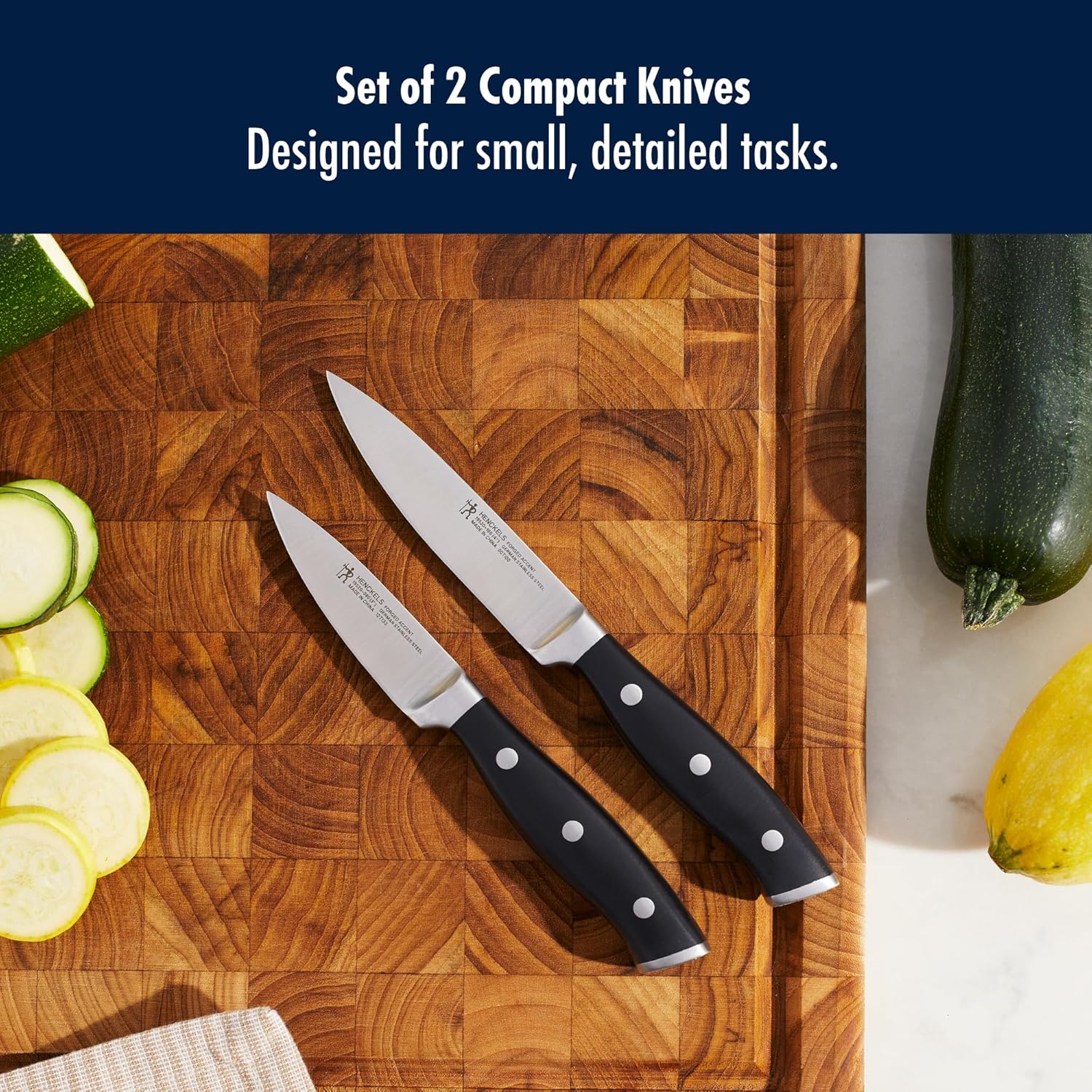
HENCKELS
$24.99
In stock on Amazon
Check price on AmazonMid-Range Tier: $150–$300
This is where the build-your-own path starts pulling clearly ahead. Wirecutter, in their long-running guide to the best chef’s knife, has consistently pointed toward a core insight: the single biggest upgrade most home cooks can make is spending $100–$175 on a genuinely excellent chef’s knife rather than spreading that same $175 across a seven-piece set where the flagship blade costs the manufacturer $30 to produce.
At the $150–$300 range, a well-curated à la carte kit beats any block set at the same price point on what matters most — the blade you’ll reach for on every cooking day.
| Knife | Suggested Pick | Approx. Price |
|---|---|---|
| Chef’s knife (8”) | Wüsthof Classic or Global G-2 | $130–$165 |
| Paring knife (3.5”) | Wüsthof Classic or Victorinox | $30–$60 |
| Bread knife (10”) | Victorinox or Mercer Culinary | $30–$45 |
| Honing steel | Wüsthof or Henckels | $30–$50 |
| Total | $220–$320 |
Serious Eats, in their guide to the best chef’s knives tested and reviewed, draws a useful distinction between German-steel and Japanese-style blades that matters at this tier. German-steel knives (Wüsthof, Henckels) typically run HRC 58–60 on the Rockwell hardness scale — forgiving to sharpen and durable under daily abuse. Japanese-style blades (Shun, MAC, Global) run HRC 60–64, holding edges longer but chipping if used carelessly on hard vegetables or frozen foods. The right choice depends on how carefully you want to treat your tools, not on prestige.
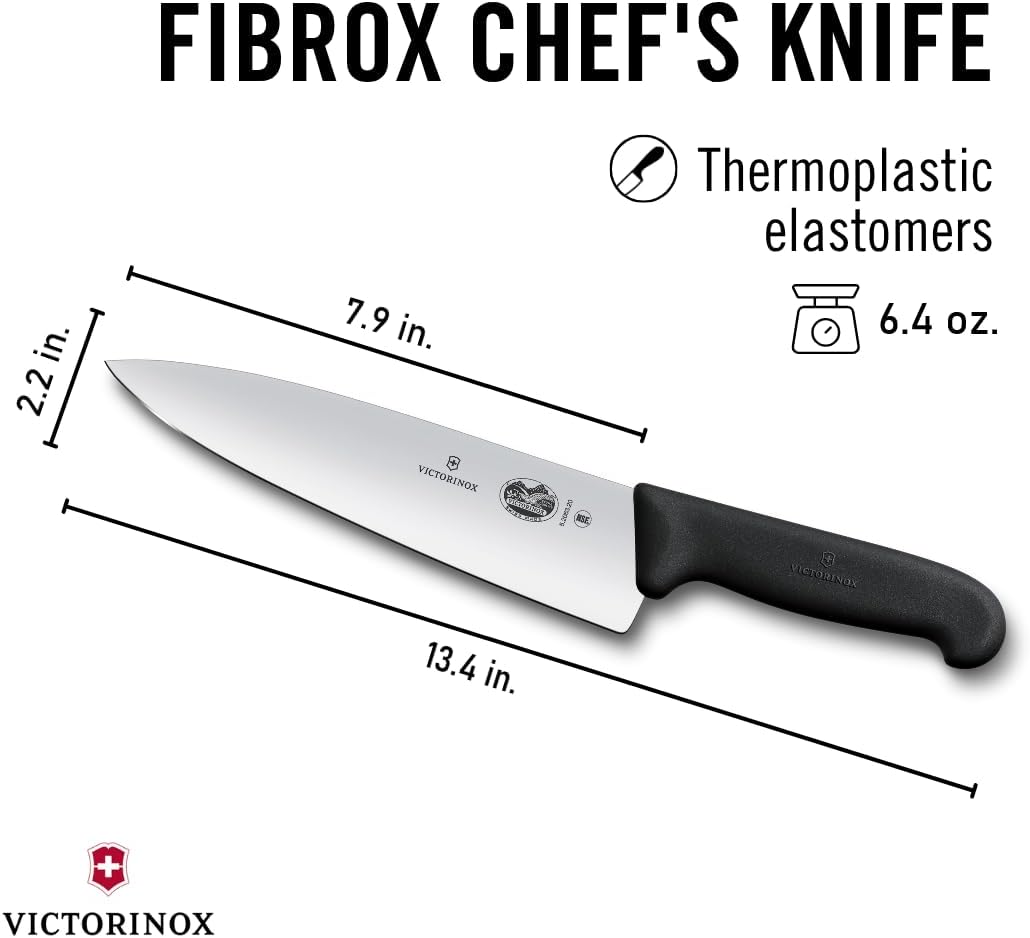
Victorinox
$44.00
In stock on Amazon
Check price on AmazonPremium Tier: $300 and Above
At $300 and above, the calculus tips decisively toward building your own kit. No block set in this range delivers equivalent performance on its centerpiece blade, because the budget is distributed too broadly across pieces you may never use. A carving knife sees action at Thanksgiving; a utility knife is a solution looking for a problem.
At this spending level, a deliberate build looks like this: a MAC MTH-80 or Wüsthof Classic Ikon 8-inch chef’s knife ($150–$175), a quality paring knife ($45–$60), a long bread knife ($35–$50), and a honing steel ($40–$55). That’s a full working kitchen for $270–$340, every dollar allocated to a blade you’ll actually use. Wirecutter’s testing on the best chef’s knife has flagged the MAC MTH-80 as one of the most praised mid-to-premium blades in the enthusiast community — thin behind the edge, lighter than comparable German knives, and comfortable for extended prep sessions.
If you cook proteins regularly, a dedicated boning knife ($40–$70) is worth adding. If Japanese and Korean cuisine dominates your cooking, a nakiri (a flat-edged vegetable cleaver) earns its counter space. These are additive decisions, made on your own terms — which is exactly the point of building your own kit.
Ninja™
$249.99
In stock on Amazon
Check price on AmazonWhere Block Sets Still Make Sense
The build-your-own argument is compelling across most scenarios, but there are genuine situations where a block set is the right call.
When you’re outfitting a first kitchen from scratch. As discussed above, entry-level block sets from Victorinox Fibrox or Wüsthof Gourmet resolve the storage, completeness, and research problems simultaneously. Epicurious coverage of best knife sets flags both as sets where the filler pieces are at least competent rather than embarrassing. You’re not making an optimal purchase, but you’re making a sane one.
When the set is built around a standout chef’s knife. Some sets — particularly from Wüsthof’s Classic line and MAC’s professional series — center on a genuinely premium chef’s knife and pad the rest of the set with decent supporting knives. In these cases, the bundle math can genuinely work. If a set prices a hero blade plus a paring knife and bread knife at a meaningful discount over buying separately, you’re effectively getting the supporting knives subsidized.
When visual cohesion matters to you. A matched set in a matching block is a design object. If you’re running a design-forward kitchen where surface presentation matters, standalone knives from different brands won’t share handle materials, weight profiles, or visual language. That’s a real consideration — just go in knowing you’re partly paying for aesthetic consistency alongside steel quality.
The Hidden Costs Both Paths Ignore
Whichever route you take, two costs routinely get skipped in the purchase decision.
Sharpening. A knife block set that costs $200 will cost another $30–$60 every one to two years in professional sharpening if you don’t maintain the blades yourself — or a one-time $60–$80 investment in a quality whetstone setup. The higher the HRC of your steel, the more critical consistent maintenance becomes. Serious Eats’ knife testing notes that Japanese-style blades at HRC 62+ require non-negotiable edge care; skip honing and the blade degrades noticeably within months. German steel is more forgiving but still loses its edge without regular upkeep. Budget this in regardless of which purchasing path you choose.
Storage. A block set solves storage by definition — the block is included. Going à la carte means you need a plan before the first knife arrives. A magnetic wall strip ($25–$60) is the preferred solution for small kitchens: it frees drawer space and keeps edges from clanking against each other. Drawer inserts with individual slots also work well. What doesn’t work: tossing good knives loose in a drawer, which dulls edges fast and creates a safety hazard. Apartment Therapy’s kitchen organization coverage has flagged this point repeatedly — magnetic strips are particularly valuable in galley kitchens where counter and drawer space is at a premium.
Running Your Own Numbers: The Decision Framework
Here’s how to make the call cleanly.
If you already own a few knives and want an upgrade, build your own. You almost certainly don’t need a full eight-piece set — you need one excellent chef’s knife and possibly a paring upgrade. Spend $130–$175 on a Wüsthof Classic, MAC MTH-80, or Global G-2 chef’s knife and put the savings toward a whetstone and a magnetic strip. You’ll end up with a better kitchen than any $200 block set delivers.
If you’re starting from zero and want a no-research shortcut, a Victorinox Fibrox set or Wüsthof Gourmet set gets you there competently for $150–$250. Accept that you’ll probably replace the chef’s knife in two to three years once you develop preferences. That’s fine — it’s a starter kit, not a lifelong commitment.
If your budget is $300 or above and you care about long-term ownership, build deliberately. Spend on the chef’s knife first, then the paring knife, then the bread knife. Let the carving knife, utility knife, and filler pieces wait — or skip them entirely.
If you cook for other people regularly, entertain, or run a content kitchen, a deliberate build is the only path that makes sense. Cook’s Illustrated has consistently documented that the professional and prosumer working core is narrow: a chef’s knife, a paring knife, a bread knife, and a boning knife if you break down proteins. Everything else is optional.
The Verdict
Block sets are sold as value bundles, but they’re really convenience purchases — and convenience has a cost. For most readers here, the right answer is to buy one exceptional chef’s knife, one good paring knife, and a bread knife, and to skip the carving fork and utility knife gathering dust in slots four through eight. Spend the difference on a whetstone and learn to use it. Five years from now, that’s a better kitchen than any block set in the same price range would have given you.
If you’re starting from nothing and want to be done deciding today, the Victorinox Fibrox set is the honest entry point. If you have any knife experience at all and want to do this once and do it right: build your own, start with the chef’s knife, and let everything else follow.