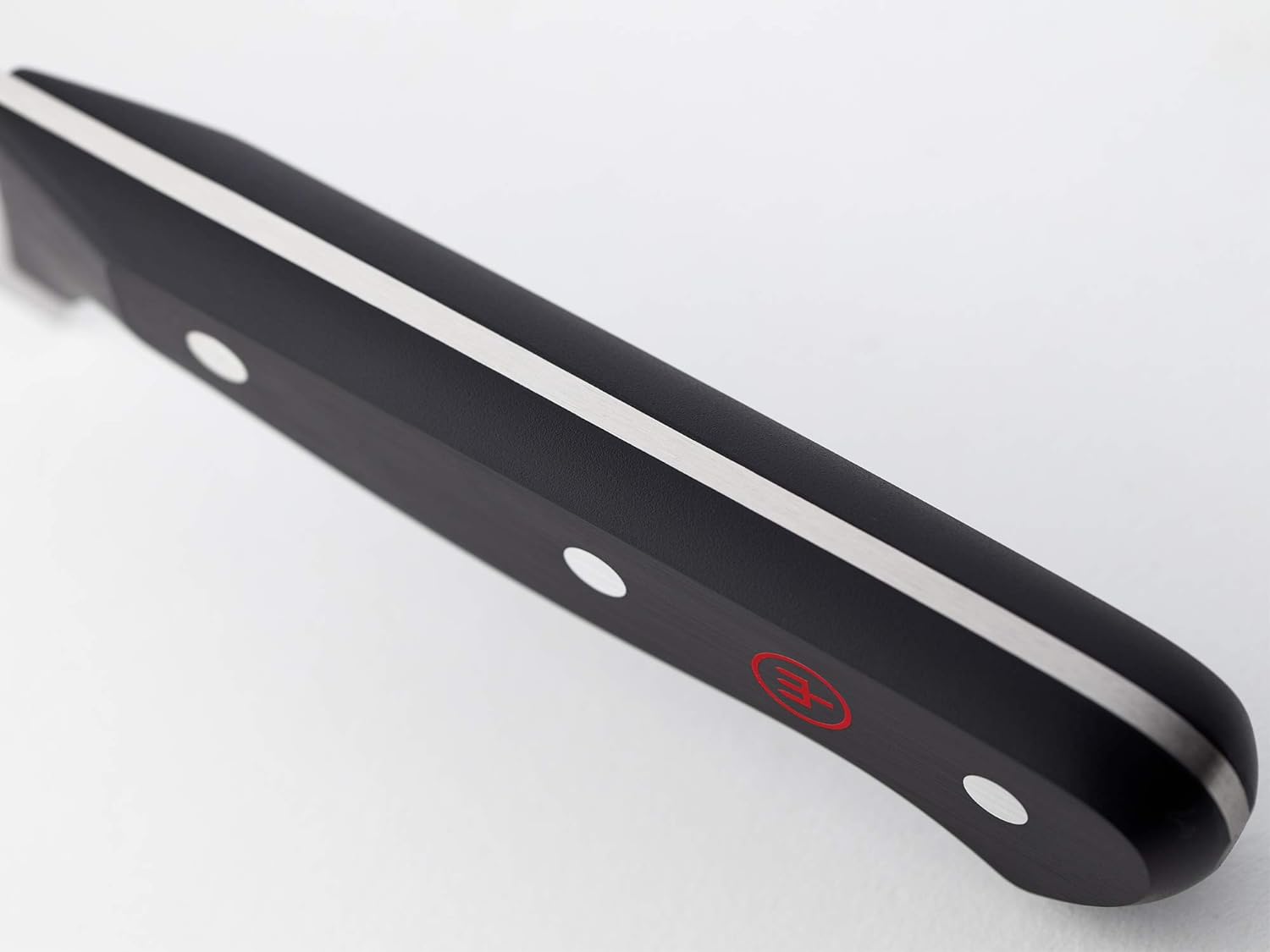
You’ve landed on a decision that sounds simple — pick a chef’s knife — and discovered it is absolutely not. Every forum thread eventually splits into two camps: German steel versus Japanese steel. Both sides cite “edge retention” and “hardness” like these terms are self-explanatory, and suddenly you’re reading about Rockwell scales and carbide microstructure at midnight. Here’s the actual difference, in plain language: German knives and Japanese knives are made from steels with different levels of hardness, which affects how long the edge stays sharp, how forgiving the knife is when you use it aggressively, and how much maintenance you’ll need to do over the years. This guide explains that tradeoff clearly, names the specific implications for how you cook, and ends with a decision rule you can apply today.
| EDITOR'S PICKShun Premier 8" Chef's Knife | Mid-tierShun Sora 8" Chef's Knife | Budget pick[HENCKELS Classic Razor-Sharp 8-…](https://www.amazon.com/dp/B00004RFMT?tag=greenflower20-20) | |
|---|---|---|---|
| Steel Type | VG-MAX Core | VG10 Steel | — |
| Cladding | Damascus Stainless | 420J Stainless | — |
| Handle Material | Pakkawood | Balanced Handle | — |
| Origin | Japanese | Japanese | German |
| Price | $219.95 | $109.95 | $49.86 |
| See on Amazon → | See on Amazon → | See on Amazon → |
What “Hardness” Actually Means — and Why It Drives Everything
Steel hardness is measured on the Rockwell C scale, usually written as HRC. The number tells you how much a material resists being deformed or dented. For knives, that translates directly into two things: how fine an edge the steel can hold, and how brittle the blade becomes.
German knives — think Wüsthof Classic, Victorinox Fibrox, Henckels Professional S — are typically hardened to 56–58 HRC. Japanese knives — Shun Classic, MAC Professional, Global G-2, and higher-end options like a Miyabi Birchwood or a Masamoto VG — generally run 60–67 HRC.
By the numbers:
| Category | Typical HRC | Typical Edge Angle | Edge Retention |
|---|---|---|---|
| German steel | 56–58 HRC | 20–25° per side | Moderate |
| Japanese steel | 60–67 HRC | 10–15° per side | High |
The harder the steel, the thinner and more acute the edge angle can be ground. A thinner angle cuts with noticeably less resistance — testers at Serious Eats (in their ongoing “The Best Chef’s Knives” guide) consistently describe the glide-through quality of a 15° Japanese edge as qualitatively different from a 20° German edge on paper-thin vegetables. But harder steel is also more brittle. That brittleness is the core tradeoff this whole debate is actually about.
The Real-World Tradeoff: Chips vs. Rolls
Here’s what brittleness means at the cutting board.
When a hard Japanese blade meets something it wasn’t designed for — a frozen item, a butternut squash stem, or a lateral twisting motion — it can micro-chip. The edge doesn’t bend; it fractures. Wirecutter’s long-form testing, documented in their “The Best Chef’s Knife” review, identifies chippage as one of the most common failure modes in owner experience with hard Japanese knives, especially among cooks who aren’t consistently precise about technique.
A softer German blade does the opposite: it rolls. The edge bends rather than breaks. That sounds worse, but a rolled edge is vastly easier to restore. Four or five strokes on a honing rod — the smooth or ridged steel rod most knife sets include — and you’ve realigned the edge. You can do this before every session. Millions of professional kitchen cooks do exactly this with their Wüsthofs and Henckels because it takes thirty seconds.
A chipped Japanese edge, by contrast, needs a whetstone or a professional sharpening service to repair. The chip has to be ground back. That’s a meaningful cost — either in your time learning to sharpen, or in money (expect $15–35 per service visit in most U.S. markets in 2026).
If X, then Y — version one: If you are a high-frequency home cook who chops everything from herbs to winter squash on the same board, reaches for your knife to break down chickens, and isn’t yet consistent about technique, the German steel’s forgiveness is actually a feature, not a compromise.
Where Japanese Steel Wins — and It’s Not Close
That said, Japanese steel’s edge retention advantage on precision cuts is real and meaningful. Cook’s Illustrated’s chef’s knife evaluations consistently place Japanese blades ahead on slicing performance through proteins and on ultra-thin vegetable work. For tasks like brunoise cuts, paper-thin cucumber slices, or long pull cuts through fish, the geometry of a harder, thinner-angled Japanese edge produces cleaner results with less effort.
The reason is physics: a thinner edge displaces less food as it passes through, which means less cellular damage, cleaner cuts, and better texture — particularly noticeable in raw fish and tomatoes. Bon Appétit’s feature “The Best Chef’s Knives for Every Cook” makes this distinction clearly: the same task, same ingredient, same cook, different knives produces a measurably cleaner result with a Japanese blade at 15° versus a German one at 20°.
Edge retention also matters in a longer session. If you’re hosting a supper club for twelve and breaking down proteins for two hours, a Japanese blade stays sharp meaningfully longer between touch-ups than a German one. The higher HRC holds the geometry better under sustained use — a direct consequence of the harder carbide structure in the steel.
Bon Appétit’s editors note, and Serious Eats echoes in their chef’s knife coverage, that Japanese knives have become the default recommendation for cooks who have developed consistent technique and treat knife maintenance as a normal part of cooking practice. That’s the intended user profile: someone who owns a mid-grit and fine-grit whetstone, sharpens on a schedule, and doesn’t use their chef’s knife to pry open a stubborn jar.
If X, then Y — version two: If your cooking skews toward high-precision prep, you’ve already developed or are actively building whetstone skills, and you’re working primarily with proteins, aromatics, and delicate vegetables — not frozen goods, not breaking down whole joints regularly — Japanese steel rewards you with a meaningfully sharper edge for longer.
The Specific Knives Worth Considering at Each Level
Let’s put real names to this. These are the options most frequently cited across Wirecutter’s “The Best Chef’s Knife” review, Serious Eats’ “The Best Chef’s Knives” guide, and Cook’s Illustrated’s chef’s knife testing, surveyed across the 2024–2026 window.
Budget Picks
Victorinox Fibrox Pro 8-inch (~$40–55): The entry-level benchmark for German steel. Owners consistently report it outperforming knives at two to three times its price in durability. The handle is purely functional — no design awards — but Cook’s Illustrated has named it a top performer across multiple testing rounds. The right choice for a first serious knife or a dedicated knock-around utility blade.
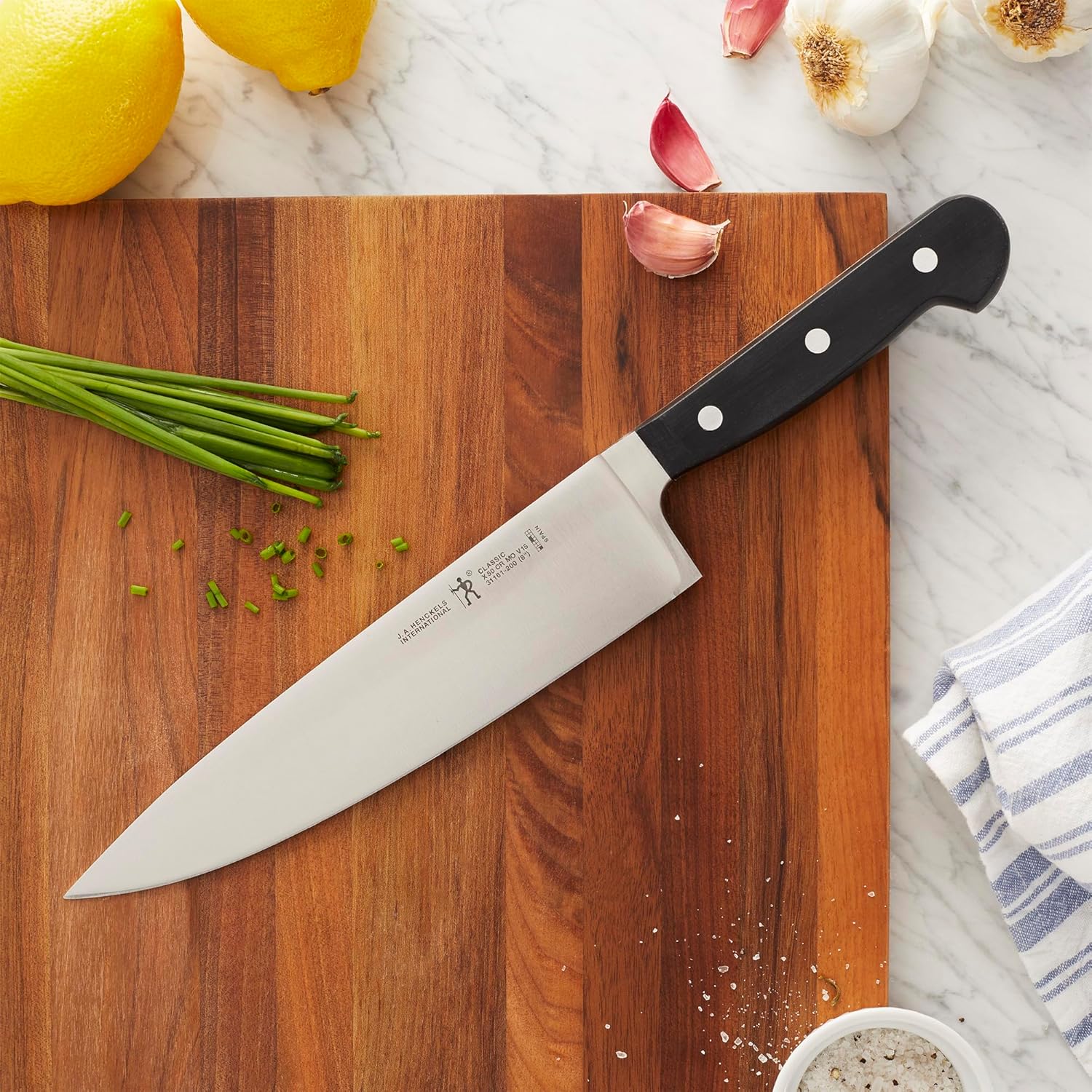
HENCKELS
$49.86
In stock on Amazon
Check price on AmazonGlobal G-2 8-inch (~$115–130): The design outlier at the lower end of Japanese-style pricing. A seamless all-steel construction eliminates the handle-blade junction where bacteria and moisture accumulate, making it popular among culinary-professional-adjacent cooks. Global’s own spec sheet places the steel around 56–58 HRC — softer than most Japanese competitors and closer to the German range in practice — but the thinner blade grind still gives it a Japanese-style cutting feel.
HENCKELS
$49.86
In stock on Amazon
Check price on AmazonMid-Tier Picks
Wüsthof Classic 8-inch (~$150–170): The category standard for German steel at mid-tier. The full-bolster handle is comfortable and balanced, the steel is consistently forgiving, and Wüsthof’s manufacturing quality control is well-regarded across aggregated professional reviews. Owners routinely report keeping these knives for decades with normal honing and occasional professional sharpening.
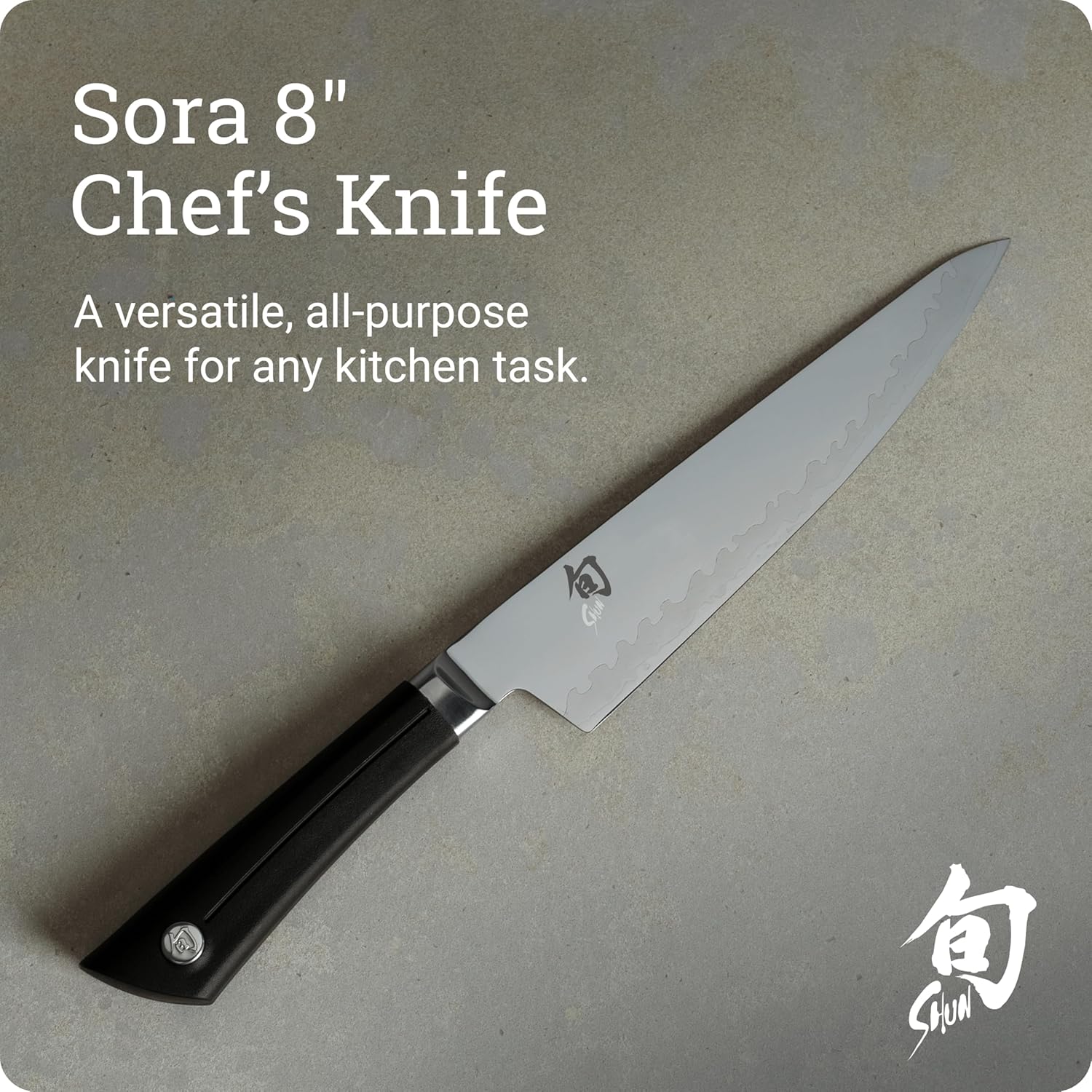
Shun
$109.95
In stock on Amazon
Check price on AmazonHenckels Professional S 8-inch (~$80–100): A reliable mid-point in the German steel category. Slightly softer than Wüsthof in practice, which means more frequent honing but fewer chips under any circumstance. Good for cooks who want the German ergonomics and durability at a step below Wüsthof pricing.
Shun
$109.95
In stock on Amazon
Check price on AmazonMAC Professional Series 8-inch (~$155–175): Serious Eats has repeatedly highlighted this knife in their “The Best Chef’s Knives” guide as a best-overall recommendation. The steel lands around 61–62 HRC — hard enough for genuine edge retention, not so extreme that casual users chip it constantly. Owners consistently report it as one of the more forgiving Japanese-steel options on the market, making it the natural starting point for cooks transitioning from German to Japanese blades.
Shun
$109.95
In stock on Amazon
Check price on AmazonShun Classic 8-inch (~$160–185): The design-conscious Japanese pick, featuring a Damascus-patterned blade and a D-shaped pakkawood handle. Reviewers across professional testing platforms note exceptional out-of-the-box sharpness. The steel runs approximately 60–61 HRC and rewards good technique. Worth flagging: the handle is designed explicitly for right-handed grip. Left-handed cooks should look at the Shun Classic Left-Handed version or consider the MAC Professional’s symmetric handle instead.
Shun
$109.95
In stock on Amazon
Check price on AmazonPremium Pick
Miyabi Birchwood 8-inch (~$280–320): The high-end Japanese option for cooks investing in craft. The SG2 micro-carbide steel runs 63 HRC. Wirecutter’s “The Best Chef’s Knife” review describes it as an exceptional performer within its category. Owners report extraordinary edge retention but also consistently flag that this knife requires maintenance discipline — chips on SG2 steel are real and costly to repair without a quality whetstone. This knife is the reward for a cook whose sharpening practice is already solid, not the place to start.
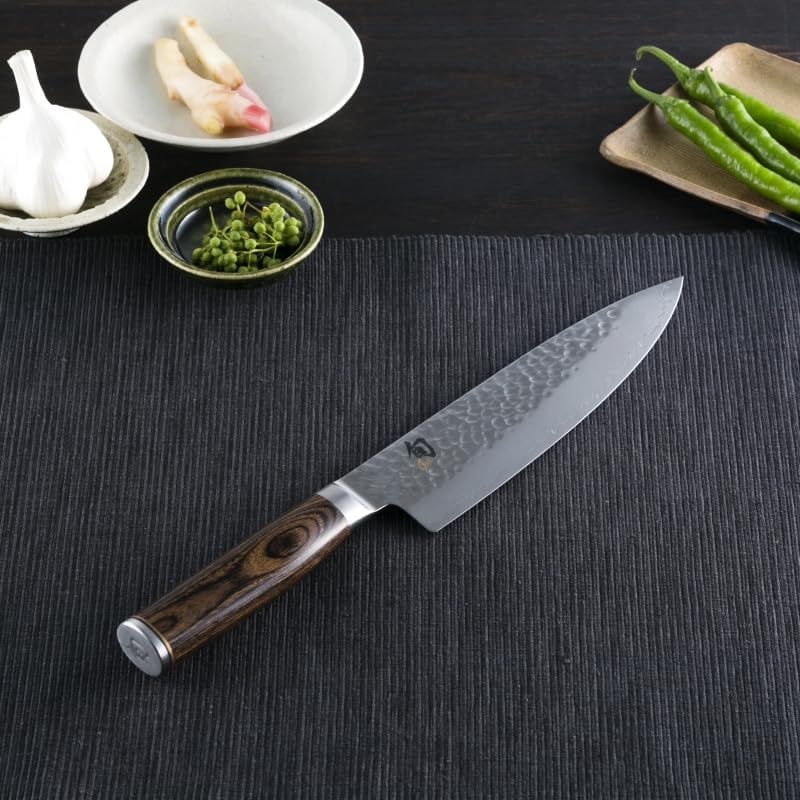
Shun
$219.95
In stock on Amazon
Check price on AmazonMaintenance Cost: The Five-Year View
This is where the framing shifts from “which is better” to “which is better for you.”
A German knife maintained with a honing rod (a $20–40 tool) and professional sharpening once a year ($15–30 per service) costs roughly $100–170 in maintenance over five years. The steel’s forgiving nature means most home cooks don’t need to own a whetstone to keep it performing well.
A Japanese knife maintained properly requires a whetstone setup. A two-stone progression — a 1000-grit and a 3000–6000-grit stone from a brand like King or Shapton — runs $60–120 up front, and sharpening is a skill with a meaningful learning curve. Owners who’ve developed the skill report it as genuinely enjoyable, a meditative part of knife ownership. Owners who haven’t report increasing frustration as their expensive knife gradually dulls without recourse.
The cost-per-use math over five years can actually favor a Japanese blade if you sharpen at home: the stone pays for itself against repeated professional service visits. But the time investment is real, and it isn’t for everyone.
The Decision Rule
Here’s the cleanest way to think about this:
Buy German steel if: You want a knife that handles rough treatment without complaint, you’re not interested in whetstone maintenance, you cook a wide variety of tasks including anything that involves bones or hard vegetables, or you’re buying for someone else. The Victorinox Fibrox is the budget entry; the Wüsthof Classic is the long-term workhorse.
Buy Japanese steel if: You cook with consistent technique, you’re drawn to high-precision prep, you’re either already sharpening at home or genuinely intend to learn, and the tactile and aesthetic qualities of a harder, thinner blade matter to you. Start with the MAC Professional or Global G-2 if you want room to be imperfect. Move to the Miyabi Birchwood or a higher-spec Shun when your maintenance practice is solid.
The honest answer most sources won’t say plainly: For the majority of home cooks — even serious ones — a well-maintained German blade performs 85–90% as well as a Japanese blade for 90% of everyday cooking tasks. The Japanese steel’s advantage is real and meaningful in the remaining 10%: precision protein work, ultra-thin slicing, long high-volume sessions. Whether that 10% justifies the extra maintenance discipline and cost is a question only you can answer based on how you actually cook.
Both steels produce excellent knives. The edge retention tradeoff is real. Your job is to pick the tradeoff that fits your kitchen, not the one that wins on spec sheets.