You’ve read ten threads about carbon steel versus cast iron, watched a handful of YouTube seasoning tutorials, and you still can’t quite commit. Both pans look similar — dark, heavy-ish, no nonstick coating — and both make promises about lasting forever. So what’s actually different? Cast iron is a skillet made from a thick alloy that’s roughly 97–98% iron with a high carbon content (2–4%), poured into a mold. Carbon steel is also mostly iron, but it contains far less carbon (typically 1% or less), which makes it thinner, lighter, and more responsive to heat changes. Think of cast iron as a heat reservoir and carbon steel as a heat conductor. Both need to be seasoned — coated in thin layers of polymerized oil — to develop a naturally nonstick surface and resist rust. This article gives you the actual tradeoff map so you can stop deliberating and buy the right one.
| EDITOR'S PICK[Le Creuset Enameled Cast Iron S](https://www.amazon.com/dp/B00B4UOTBQ?tag=greenflower20-20)… | Mid-tier[de Buyer MINERAL B Carbon Steel](https://www.amazon.com/dp/B00NSHWEHE?tag=greenflower20-20)… | Budget pick[Lodge Seasoned Carbon Steel Ski](https://www.amazon.com/dp/B005U93RYW?tag=greenflower20-20)… | |
|---|---|---|---|
| Material | Enameled Cast Iron | Carbon Steel | Carbon Steel |
| Diameter | 11.75" | 12.5" | 12" |
| Cooking Surface | — | 9" | — |
| Price | $253.99 | $100.00 | $49.99 |
| See on Amazon → | See on Amazon → | See on Amazon → |
The Core Physics: Why the Carbon Difference Changes Everything
This is where the decision starts. The metallurgy gap between the two materials isn’t just trivia — it directly explains why each pan excels in different cooking scenarios.
Cast iron’s thick walls and high thermal mass mean it takes longer to heat up, but once it’s hot, it holds that temperature ferociously. Drop a cold steak into a properly preheated cast iron and the surface temperature barely flinches. That’s the thermal mass doing its job. In his Serious Eats overview titled “What Is Carbon Steel and Why Should You Cook With It?”, Daniel Gritzer notes that cast iron’s density makes it exceptional for tasks requiring sustained, even heat — cornbread, deep-dish pizza, long braises, anything that benefits from an oven-safe vessel that doubles as a persistent heat source.
Carbon steel’s thinner walls (typically 2–3mm versus cast iron’s 4–6mm) mean it heats up and cools down much faster. That’s not a weakness — it’s a feature for cooks who need precise temperature control. Sasha Marx, writing in Serious Eats’ “The Best Carbon Steel Skillets, Tested and Reviewed,” points out that carbon steel is the default pan in most professional kitchens precisely because this responsiveness lets cooks move fast: searing fish skin-side-down and immediately dialing back heat to avoid overcooking, or bringing a pan to ripping-hot for a quick stir-fry without committing to that heat for the next ten minutes.
By the numbers:
| Property | Carbon Steel (typical) | Cast Iron (typical) |
|---|---|---|
| Carbon content | 0.5–1% | 2–4% |
| Wall thickness | 2–3mm | 4–6mm |
| Weight (10-inch) | 3–4 lbs | 5–8 lbs |
| Heat-up time | Fast (3–5 min) | Slow (8–12 min) |
| Heat retention | Moderate | Excellent |
Where Each Pan Wins: A Head-to-Head Breakdown
Cast Iron: The Durable, High-Retention Workhorse
Cast iron earns its reputation in specific cooking scenarios where its thermal mass is an asset rather than a liability.
It wins as a baking vessel. A 12-inch cast iron skillet goes from stovetop sear to 500°F oven without protest. Cornbread, frittatas, skillet cookies, reverse-seared thick-cut steaks — cast iron is the right tool. Lesley Stockton’s cast-iron skillet guide for Wirecutter, titled “The Best Cast-Iron Skillet,” consistently highlights the Lodge L8SK3 as a near-perfect value pick precisely because it performs identically in stovetop and oven applications. At roughly $30–40, it represents one of the strongest cost-to-performance ratios in cookware.
It wins for forgiving long-term ownership. Cast iron’s thick walls are harder to warp, harder to damage with aggressive scrubbing, and easier to re-season if neglect strips the coating. Owners across multiple review cycles report that a properly seasoned cast iron pan is genuinely a generational tool — vintage Lodge skillets still show up at estate sales and cook perfectly after a simple re-season. For sporadic cooks or those who share kitchen duties with less-attentive household members, this forgiveness has real practical value.
It wins on a gas stovetop at high heat. The slow heat-up is less of a handicap if you leave the pan on a burner for 10–12 minutes before cooking. Most cast iron cooks develop this habit quickly and stop noticing the inconvenience.
Where cast iron loses ground: It’s a difficult tool for delicate proteins. Eggs, fish fillets, crepes — cast iron’s thermal mass makes it difficult to prevent scorching once the pan is fully preheated. The pan doesn’t respond quickly to “back off, I’m done.” Its weight is also a genuine accessibility issue. A 12-inch cast iron at 7-plus pounds isn’t fun to flip vegetables in, and it’s genuinely difficult for people with wrist or grip limitations. This is a real design constraint, not a soft complaint.
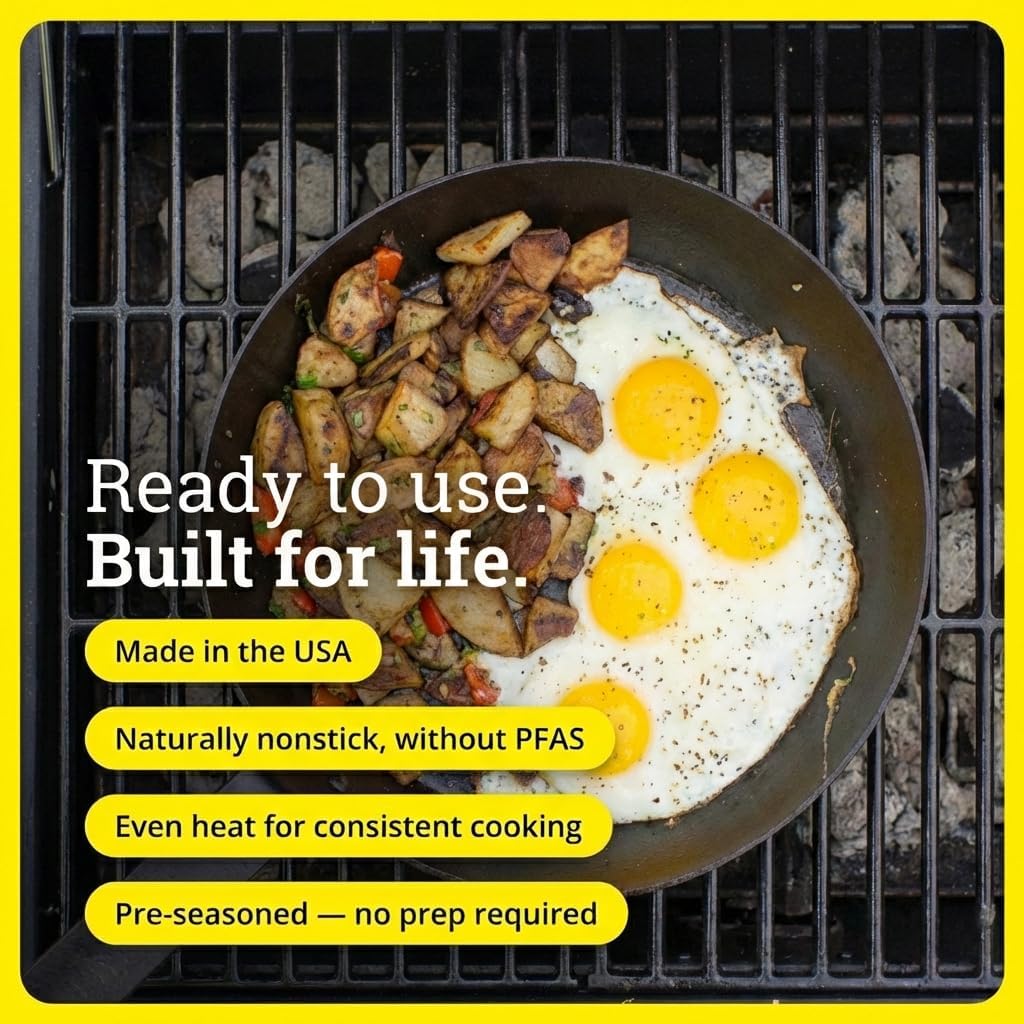
Lodge
$49.99
In stock on Amazon
Check price on AmazonCarbon Steel: The Responsive, Professional-Kitchen Standard
Carbon steel occupies a different niche — one that overlaps with cast iron but diverges sharply in the scenarios that matter most to certain cooks.
It wins for heat control with delicate foods. Carbon steel’s responsiveness makes it genuinely excellent for eggs, fish, and thin crepes. Owners consistently report that a well-seasoned carbon steel pan approaches the nonstick performance of a coated pan for these applications. Cook’s Illustrated, in their equipment review titled “Carbon-Steel Skillets,” cites De Buyer’s Mineral B line as achieving this nonstick performance reliably once properly broken in — a finding that aligns with what professional kitchens have known for decades.
It wins on induction cooktops. Carbon steel is induction-compatible and, crucially, its lighter weight and typically smoother bottom surface make it gentler on glass-ceramic cooktops than a heavy cast iron skillet dragged across the surface. For the induction-first household — a growing segment since induction ranges became mainstream — this matters practically and daily.
It wins for weight-conscious cooks. The Bon Appétit staff feature “Cast Iron vs. Carbon Steel: What’s the Difference?” describes carbon steel as “the sweet spot for cooks who want the benefits of a seasoned iron surface without committing to the weight.” The Matfer Bourgeat 11⅞-inch carbon steel skillet — a pan used widely in professional kitchens — is roughly 4 lbs, about half the weight of a comparable cast iron. That difference is felt over a long cooking session or when maneuvering a pan from burner to oven to counter.
It wins aesthetically for the dedicated cook. A seasoned carbon steel pan develops a deep, mottled black patina over years that serious cookware enthusiasts genuinely prize. If you’re drawn to the Le Creuset color palette or the visual weight of a Shun Classic knife, a well-seasoned Matfer or De Buyer pan has a striking visual payoff that the rough-cast surface of a standard Lodge doesn’t replicate.
Where carbon steel loses ground: It’s unforgiving of inattentive ownership, particularly early on. Carbon steel rusts faster than cast iron when stored improperly or left wet, and its thinner walls warp more easily if heated empty on very high heat for extended periods. Cook’s Illustrated’s “Carbon-Steel Skillets” review explicitly flags this break-in period — roughly the first 3–6 months — as the most common reason cooks abandon carbon steel prematurely. They hit rust or uneven seasoning in month two and assume the pan is defective rather than recognizing they skipped the conditioning step.
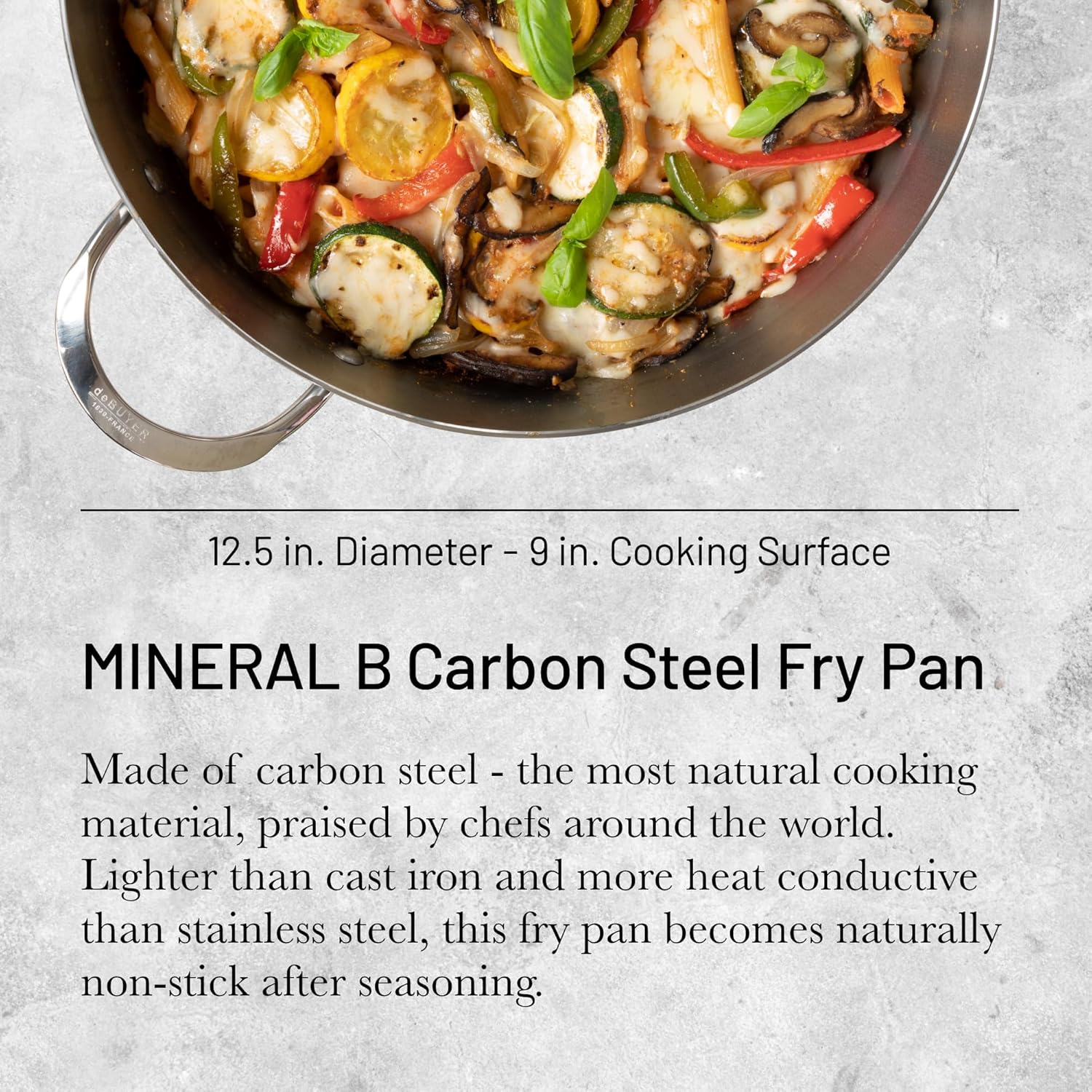
de
$100.00
In stock on Amazon
Check price on AmazonPremium and Specialty Options: When to Spend More
Not all cast iron is created equal, and the premium end of both categories addresses some of the complaints listed above.
Machined cast iron (Stargazer, Butter Pat) addresses one of cast iron’s most frequent criticisms — its rough cooking surface. Standard Lodge skillets are sand-cast, leaving a pebbly texture that slows seasoning development and makes the pan feel sticky longer. Stargazer and Butter Pat machine their cooking surfaces smooth after casting, narrowing the slickness gap with carbon steel significantly. Wirecutter’s “The Best Cast-Iron Skillet” acknowledges this tradeoff: the machined options perform better out of the box for eggs and fish, but cost three to five times the price of a Lodge. For cooks who want cast iron’s thermal mass but carbon steel’s cooking surface, this is the answer — at a price.
High-carbon professional steel (Matfer Bourgeat Black Steel, De Buyer Mineral B Pro) represents the carbon steel ceiling for home use. These are the pans that appear in restaurant equipment catalogs and are purchased by culinary school programs. They’re thicker-gauged than entry-level carbon steel, which reduces the warping risk, and they develop seasoning faster than cheaper alternatives due to their surface preparation. Daniel Gritzer’s Serious Eats piece “What Is Carbon Steel and Why Should You Cook With It?” covers the distinction between entry-level and professional-grade carbon steel in detail, noting that the gauge difference meaningfully changes the pan’s behavior over high heat.
For a household that wants one carbon steel pan that will last twenty years and perform like professional equipment, the investment in a Matfer or De Buyer Mineral B Pro is defensible. For a household testing the category before committing, a mid-range option lets you confirm that carbon steel suits your cooking style before spending at the professional tier.
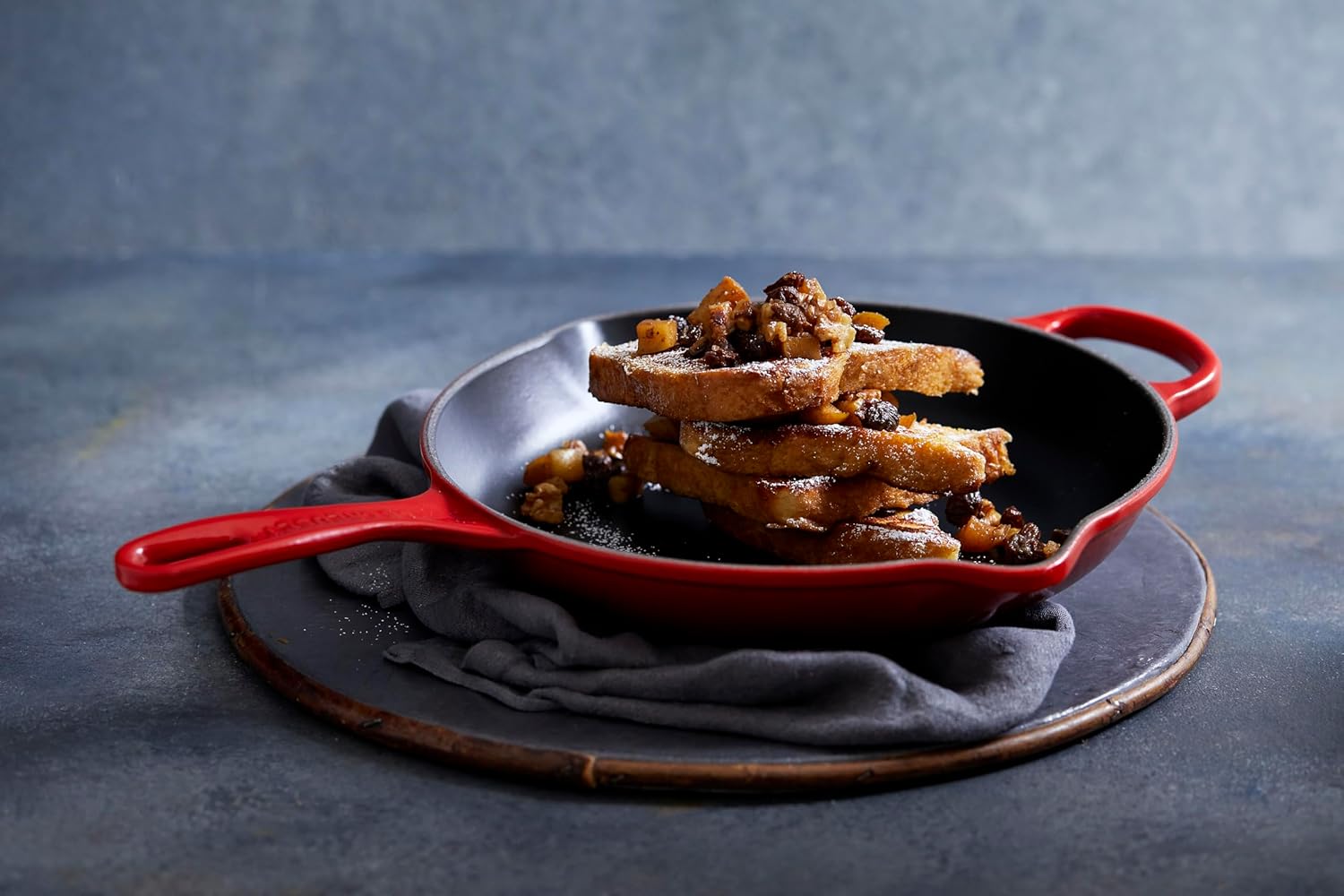
Le
$253.99
In stock on Amazon
Check price on AmazonThe Maintenance Reality Over Five Years
Both pans require seasoning — the process of baking thin layers of oil onto the iron surface to create a polymerized coating that protects against rust and provides nonstick properties. But the maintenance curve differs in ways that matter for your real life.
Cast iron develops a thicker, more forgiving seasoning layer over time. After the first year of regular cooking, most cast iron skillets reach a level of seasoning that tolerates hand-washing with mild soap without immediate degradation — despite the conventional wisdom that soap destroys seasoning. Serious Eats has covered this directly in multiple pieces, noting that modern dish soaps are far milder than the lye-based soaps that gave rise to the “never use soap on cast iron” rule. If seasoning does strip — from acidic foods, improper storage, or aggressive scrubbing — cast iron re-seasons straightforwardly in a home oven with a tablespoon of oil and an hour at 450–500°F.
Carbon steel builds a thinner seasoning layer that’s more vulnerable early in the pan’s life. The first 3–6 months demand more attention: cook fat-rich foods rather than acidic ones, dry the pan thoroughly after every wash, and apply a light wipe of oil before storage. Cook’s Illustrated’s “Carbon-Steel Skillets” review notes that this break-in period is the most common reason cooks abandon carbon steel prematurely — they hit rust or uneven seasoning in month two and assume they did something wrong, when the pan was simply still developing its base layers.
The five-year cost picture is nearly identical for both materials: neither requires replacement under normal use, and re-seasoning costs nothing but a tablespoon of oil and an hour in the oven. The real cost difference is time investment early on, with carbon steel demanding more deliberate attention upfront before it becomes the effortless pan its advocates describe.
Clear Decision Rules: If X, Then Y
If you cook on induction and value heat responsiveness → carbon steel is the right choice. The Matfer Bourgeat Black Steel Round Frying Pan and De Buyer Mineral B are the two names that consistently surface in professional and serious home-cook circles. They perform on induction, age into beautiful objects, and handle eggs and fish in a way cast iron can’t match.
If you bake, want a stovetop-to-oven vessel, or want the most forgiving long-term ownership experience → cast iron wins. The Lodge L8SK3 12-inch skillet at $30–40 is the correct entry point. If you want a smoother surface and are willing to spend more, the Stargazer or Butter Pat lines offer machined cooking surfaces that narrow the gap with carbon steel’s slicker finish.
If you’re an apartment cook with limited storage → consider pan diameter before material. A 10-inch carbon steel for everyday cooking and a single enameled cast iron Dutch oven covers 90% of use cases without the weight penalty of a full cast iron skillet collection.
If you have wrist, grip, or strength limitations → carbon steel, specifically the lighter 10-inch size. The weight difference is not trivial at scale and compounds over a long cooking session.
If you want to own one serious pan and cook everything → cast iron’s versatility edge wins by a narrow margin, but accept its limitations with delicate proteins and budget ten minutes of preheat time into your cooking routine.
The honest verdict: these are not competing products. They’re adjacent tools that overlap in most cooking tasks but diverge sharply in the scenarios that define your actual cooking style. Most serious home cooks end up owning one of each within a few years — and once you stop treating this as an either/or decision, the specific buying question gets much easier to answer.