You’ve probably spent twenty minutes reading forum debates about steel hardness and handle ergonomics, only to come away more confused about whether the $250 German knife is actually better than the $65 one. A chef’s knife — the single wide-bladed, 8-to-10-inch workhorse that handles maybe 80% of your prep work — is the most personal tool in the kitchen, and price alone is a terrible guide. The steel type (basically, how hard the blade is and how it responds to sharpening), the handle geometry, the blade profile (the curve from tip to heel), and the overall balance point all matter more than the number on the price tag. This article breaks down which knives under $100 are genuinely excellent, which ones are compromise picks, and — critically — when you should ignore the budget ceiling entirely and spend more.
Why the $50–$100 Range Produces Legitimately Great Knives
Let’s be direct about the economics. A $200 knife is not twice the knife that a $100 knife is. Once you’re past roughly $60–70 in retail price, you’ve cleared the threshold where manufacturers can afford decent steel, consistent heat treatment, and ergonomic handle construction. What you’re paying for above that line is thinner grinds, more exotic alloys, hand-finishing, and brand prestige — real things, but things with diminishing returns for most home cooks.
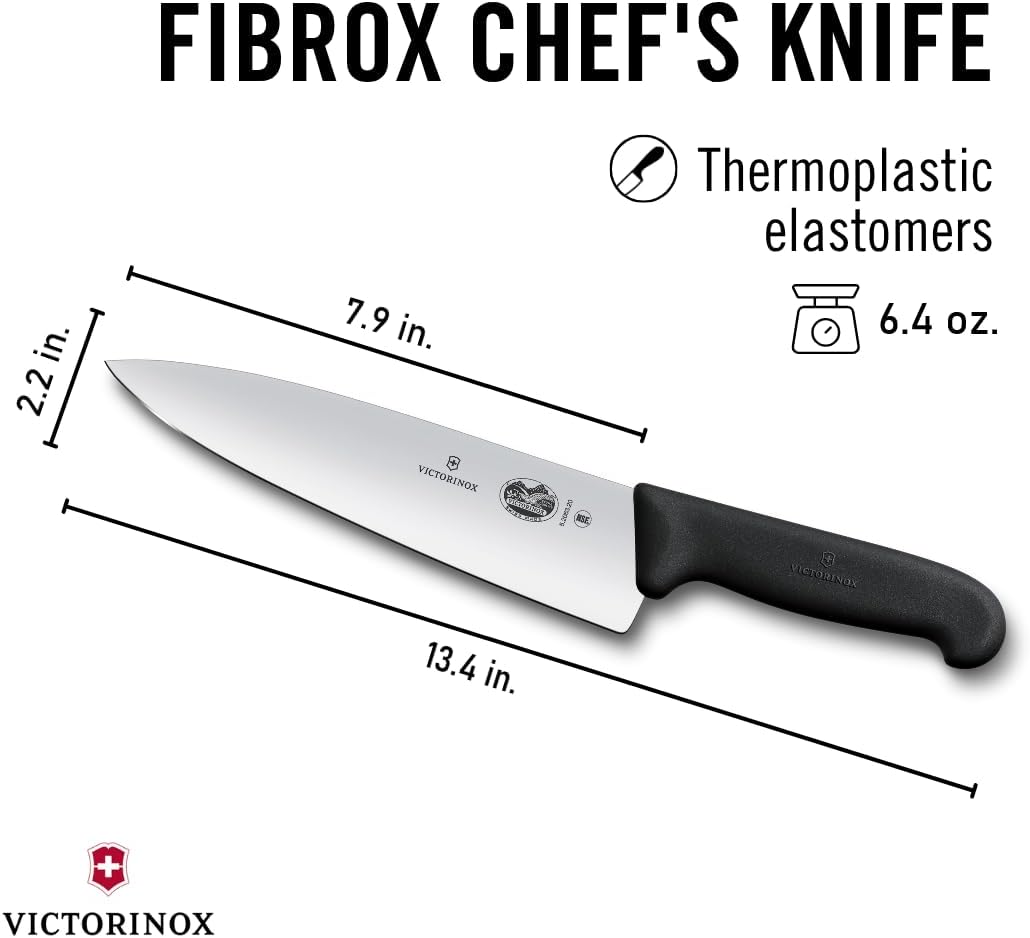
The Victorinox Fibrox Pro 8-inch chef’s knife is the canonical proof of this. It retails around $55 and has been the consistent benchmark pick at Wirecutter, Serious Eats, and Cook’s Illustrated for years. Reviewers across those outlets keep returning to the same conclusions: the Swiss-made stamped blade (stamped means cut from a steel sheet rather than forged from a single billet — simpler, lighter, and easier to sharpen) holds a serviceable edge, the textured Fibrox handle provides reliable grip even with wet hands, and the blade profile is genuinely all-purpose. It’s not exciting. It is exceptional value. Serious Eats’ equipment coverage describes it as the knife they’d hand to a culinary student on day one precisely because it requires no adjustment period and no anxiety about abuse.
The other name that comes up constantly in this tier is the Mercer Culinary Millennia 8-inch, which hovers around $30–35 and is essentially the Victorinox’s slightly less refined sibling — same stamped German steel category, a little more flex in the blade, but owners consistently report it holds up through years of daily prep work. It’s the pick for someone equipping a first kitchen under a hard budget constraint.
By the numbers:
| Knife | Approx. retail | Steel type | Blade hardness (HRC) | Best for |
|---|---|---|---|---|
| Victorinox Fibrox Pro 8” | ~$55 | Stamped German (X50CrMoV15) | ~56 HRC | All-purpose workhorse |
| Mercer Culinary Millennia 8” | ~$32 | Stamped German | ~54–56 HRC | Entry-level daily driver |
| Tojiro DP Gyuto 210mm | ~$90 | Forged VG-10 (Japanese) | ~60 HRC | Edge-obsessed intermediate cook |
| Victorinox Rosewood 8” | ~$75 | Same blade, upgraded handle | ~56 HRC | Design-conscious buyer |
HRC (Rockwell Hardness Scale C) measures how hard the steel is. Higher means the edge holds longer but can chip if you’re rough with it; lower is tougher but needs more frequent honing.
The One Under-$100 Japanese Knife Worth Taking Seriously
Here’s where the conversation gets more interesting. The Tojiro DP Gyuto 210mm (roughly equivalent to an 8.25-inch Western chef’s knife) retails around $85–95 depending on the retailer, and it occupies a genuinely different performance category than the German stamped picks above — not just a marginal step up.
The key difference is the steel. Tojiro uses VG-10, a Japanese stainless alloy that’s heat-treated to around 60 HRC. That extra hardness means the blade takes and holds a significantly keener edge than the Victorinox’s 56 HRC steel. Epicurious’s buying guides describe the Tojiro DP as the knife that “converts” intermediate cooks to Japanese-style blades: once you’ve broken down a chicken or sliced tomatoes with a properly sharpened Gyuto, the tactile difference is hard to un-feel.
The tradeoffs are real and worth naming explicitly:
- Harder steel chips more easily. Drop it tip-first onto a tile floor or run it across a ceramic plate edge, and you may see micro-chipping you’d never get from the Victorinox. If your sharpening kit is a pull-through gadget and a prayer, this is the wrong knife.
- The handle is utilitarian. The Tojiro DP’s black laminate handle is functional but plain. Owners who’ve compared it directly to the Shun Classic (which runs $150+) consistently note the handle as the most obvious step-down.
- Thinner spine, different technique. The Western German blade profile has a pronounced curve for rocking cuts; the Gyuto is flatter and rewards a more forward-and-down push-cut technique. It’s not hard to learn, but it’s an adjustment.
If you already own a whetstone (a flat sharpening stone used with water or oil — the correct tool for high-hardness Japanese steel) and you want the sharpest knife your money can buy under $100, the Tojiro DP is the answer. Cook’s Illustrated’s equipment evaluations have pointed to it as the best-performing knife in the sub-$100 Japanese category for this exact reason.
The Design-Conscious Option and Why It Exists
Not every buying decision is purely functional, and there’s no reason to pretend otherwise. The Victorinox Rosewood 8-inch runs about $70–75 and uses the identical blade as the Fibrox Pro but wraps it in a warm, triple-riveted rosewood handle. It looks like a serious kitchen knife. It feels heavier in hand (the handle adds weight) and reads visually closer to a $150+ German knife from Wüsthof or Henckels.
Owners report that the handle is slightly less grippy with wet hands than the textured Fibrox polymer — a real, if minor, functional tradeoff. But if you’re equipping a kitchen where the tools are part of the aesthetic and you want something that photographs well and feels considered, this is the honest pick. The blade performance is identical to the Fibrox; you’re paying ~$20 for a material upgrade that also happens to look better on a magnetic knife strip.
When You Should Spend More — and When You Shouldn’t
This is the section most buying guides avoid, probably because it complicates the recommendation. Here’s the actual decision framework:
Spend more (go to $150–$250) if:
- You’re sharpening on a whetstone regularly and you’ll maintain a proper edge. The premium you pay on a Shun Classic or a Wüsthof Ikon is largely about thinner grinds and better steel that rewards skilled sharpening — it’s wasted if the knife spends its life on a pull-through sharpener.
- You’re doing high-volume prep. Private chefs and supper-club cooks who are processing 10+ pounds of vegetables per session will notice the fatigue difference between a properly balanced forged knife and a stamped one over time. Reviewers who’ve used both in professional contexts consistently note that the blade geometry of forged German knives (like the Wüsthof Classic, around $165) delivers better knuckle clearance through thick root vegetables and dense squash.
- You care about 20-year ownership. The Victorinox Fibrox blade is reprofileable, but the handle is plastic and not user-replaceable. A forged Wüsthof or Henckels Pro with a full tang (meaning the steel extends the full length of the handle) is more rebuildable over a decade of use.
Stay under $100 if:
- You’re a competent home cook who wants an excellent daily driver without maintenance anxiety.
- You’re buying a knife to live in a rental kitchen, a cabin, or any context where it might get mishandled.
- You’re buying a gift for someone whose sharpening habits you can’t vouch for.
- You’re testing whether Japanese blade geometry suits your technique before committing $200+ to a Shun or a MAC Professional.
The Wirecutter’s long-running chef’s knife guide makes this math explicit: for most home cooks, the Victorinox Fibrox is “just as good in practice” as knives three times the price, because the real performance variable is sharpening discipline, not purchase price.
The Maintenance Reality Check
Every knife recommendation is incomplete without this: the best knife you own is the one you actually keep sharp. A $65 Victorinox that gets honed on a steel rod before each use and sharpened on a whetstone twice a year will outperform a $250 Shun that’s been dulled on a glass cutting board and never touched up.
What maintenance actually looks like for these three picks:
- Victorinox Fibrox / Mercer Millennia: The softer steel hones easily with a standard honing rod. Pull-through sharpeners won’t ruin it. If you’re a beginner to sharpening, this is your knife.
- Tojiro DP: Needs a whetstone or a quality ceramic rod. Pull-through sharpeners are too aggressive and will damage the thinner bevel. Budget $30–50 for a King 1000/6000 combination stone if you’re buying this knife.
- Victorinox Rosewood: Same maintenance as the Fibrox — fully forgiving.
The Verdict: If X, Then Y
If you want a reliable all-purpose knife with zero maintenance anxiety: Victorinox Fibrox Pro, ~$55. It’s not exciting, and that’s exactly the point.
If you want the sharpest knife under $100 and you own or will buy a whetstone: Tojiro DP Gyuto 210mm, ~$85–95. Accept the tradeoffs on handle aesthetics and chipability; the edge performance is genuinely in a different class.
If you want the Fibrox blade but care how your kitchen looks: Victorinox Rosewood, ~$75. Pay the $20 delta with clear eyes — you’re buying aesthetics, not performance.
If any of these recommendations make you feel like you’re settling: that’s a signal to skip this budget tier entirely. Serious Eats’ equipment team frames it well — there’s no shame in spending $150 on a Wüsthof Classic if you’re going to use it every day for twenty years. The per-use cost math over a decade makes the premium version a more rational purchase than it looks at the point of sale. But for the vast majority of home cooks, the budget picks in this guide aren’t a compromise. They’re the honest answer.